Asian Motorcycle Culture
Asian motorcycle culture occupies a special place in the global motorcycle industry. The region has the world's largest motorcycle markets, the largest number of riders, and the most diverse cultures of motorcycle use. From Japan's precision craftsmanship to India's practicality, from China's rapid development to Southeast Asia's distinctive local flavor, Asian motorcycle culture forms a rich and colorful picture.
Japan is the leader of Asian motorcycle culture. The four major Japanese brands—Honda, Yamaha, Suzuki, and Kawasaki—control more than half of the global motorcycle market. Yet the significance of Japanese motorcycle culture goes far beyond commercial success. From road racing in the 1960s to the Cafe Racer wave of the 1970s, from the sportbike boom of the 1980s to the popularity of adventure motorcycles in the 1990s, Japan's motorcycle culture has continued to guide global trends.
Tokyo's motorcycle culture is especially noteworthy. The city has one of the highest motorcycle densities in the world, and motorcycles are a daily means of transport for many commuters. On Tokyo streets at night, delivery riders busy with food orders mingle with cruiser riders enjoying weekend rides. This coexistence of the everyday and the special gives Tokyo's motorcycle culture its distinctive character.
Although China's motorcycle culture started later, it has developed at an astonishing pace. Before the 1970s, motorcycles were still rare in China. After reform and opening, rapid economic development brought motorcycles into ordinary households. The 1990s to the 2000s became a period of rapid growth for China's motorcycle market, with major domestic brands such as Chunlan, Zongshen, and Qianjiang rising, while foreign brands also began establishing joint ventures in China.
Today China is the world's largest motorcycle market, with annual production and sales exceeding 15 million units. However, the market is undergoing structural change. As cars become more common and electric motorcycles rise, the market share of traditional gasoline motorcycles is declining. At the same time, demand for large-displacement leisure motorcycles is emerging, reflecting the trend of consumption upgrading in Chinese society.
India's motorcycle culture is closely tied to practicality. This country of 1.3 billion people is one of the world's largest motorcycle markets, with annual sales exceeding 20 million units. In India, motorcycles are mainly used as transportation for families and commerce, and it is common to see a family member and everyday goods riding on the rear seat. Indian riders have created a distinctive "Indian carrying aesthetic" that may seem unbelievable to Europeans and Americans, but is a true picture of daily life in India.
The Indian market has also nurtured some distinctive brands. Royal Enfield is one of India's oldest motorcycle brands and has grown rapidly in international markets in recent years. The brand's models are known for simple design and relatively low prices, attracting many novice riders who want to enter the world of large-displacement motorcycles.
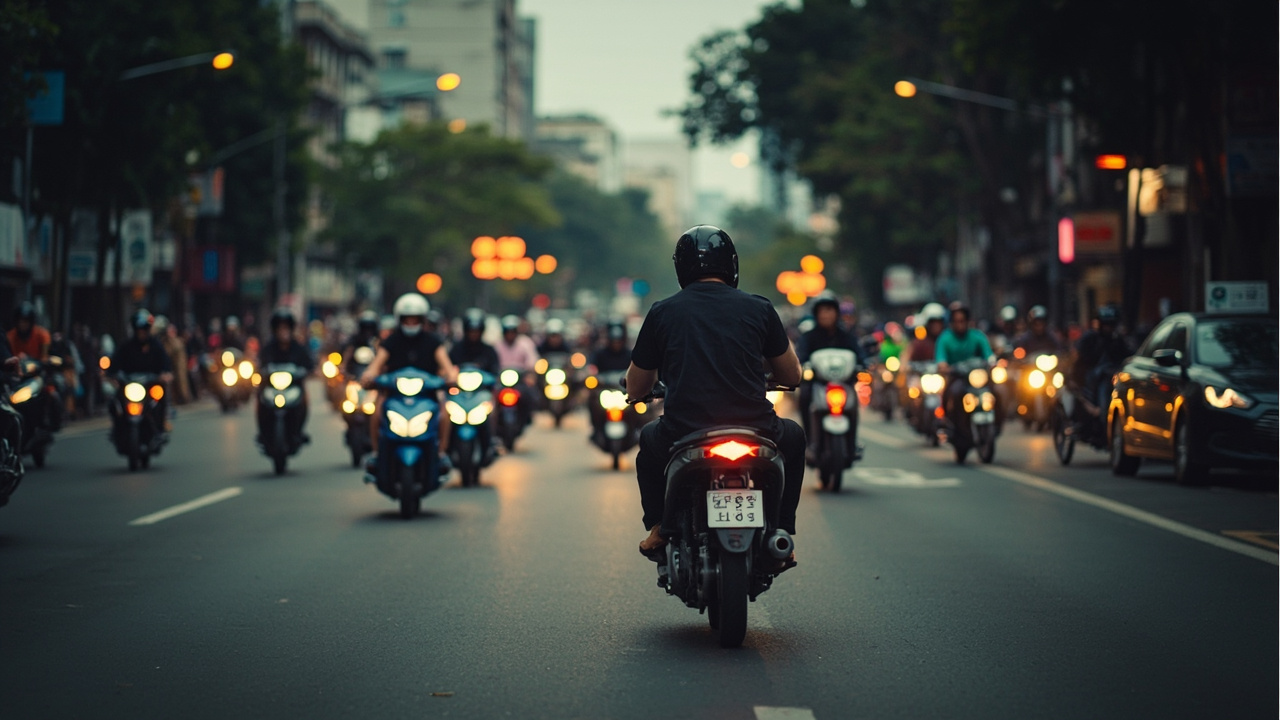
Southeast Asian motorcycle culture has its own development path. Vietnam, Thailand, Indonesia, Malaysia, and other countries have very high motorcycle ownership rates, and motorcycles are the only motorized transport for many families. Unlike China, Japan, and India, Southeast Asian motorcycle culture leans more toward small-displacement scooters and underbone motorcycles, which better suit the local hot climate and compact living spaces.
Thailand's motorcycle culture has changed significantly in recent years. Bangkok's traffic congestion has led many people to give up cars and ride motorcycles instead, while the market for large-displacement motorcycles is also growing rapidly. Thailand has become one of Southeast Asia's most important motorcycle aftermarket centers, and many international brands produce modification parts there.
Taiwan's motorcycle culture has a place in the global rider community. Taiwan is the birthplace of Gogoro electric scooters and the first market in the world to commercialize battery swapping at large scale. In Taiwan, motorcycles are the most common form of personal transport, with more than one motorcycle per household on average. Motorcycle touring culture is also well developed in Taiwan, and Suhua Highway and Beiyi Highway are beloved routes.
Taiwan's motorcycle manufacturing industry also has noteworthy competitiveness. KYMCO and SYM are Taiwan's two major motorcycle brands, holding important shares in the global scooter market. In recent years, these brands have begun entering the large-displacement leisure motorcycle market, attempting to build a more premium brand image globally.
Although South Korea's motorcycle culture is smaller in scale, it has also developed in recent years. The partnership between Hyundai and KTM has brought new possibilities to the Korean market. South Korea's rider culture is relatively young and still developing.
Overall, Asian motorcycle culture is a constantly evolving organism. The region's motorcycle culture preserves unique local traditions while actively absorbing influences from Europe, America, and Japan. As technology advances and consumer needs change, Asian motorcycle culture will continue to play an important role in the global motorcycle industry.