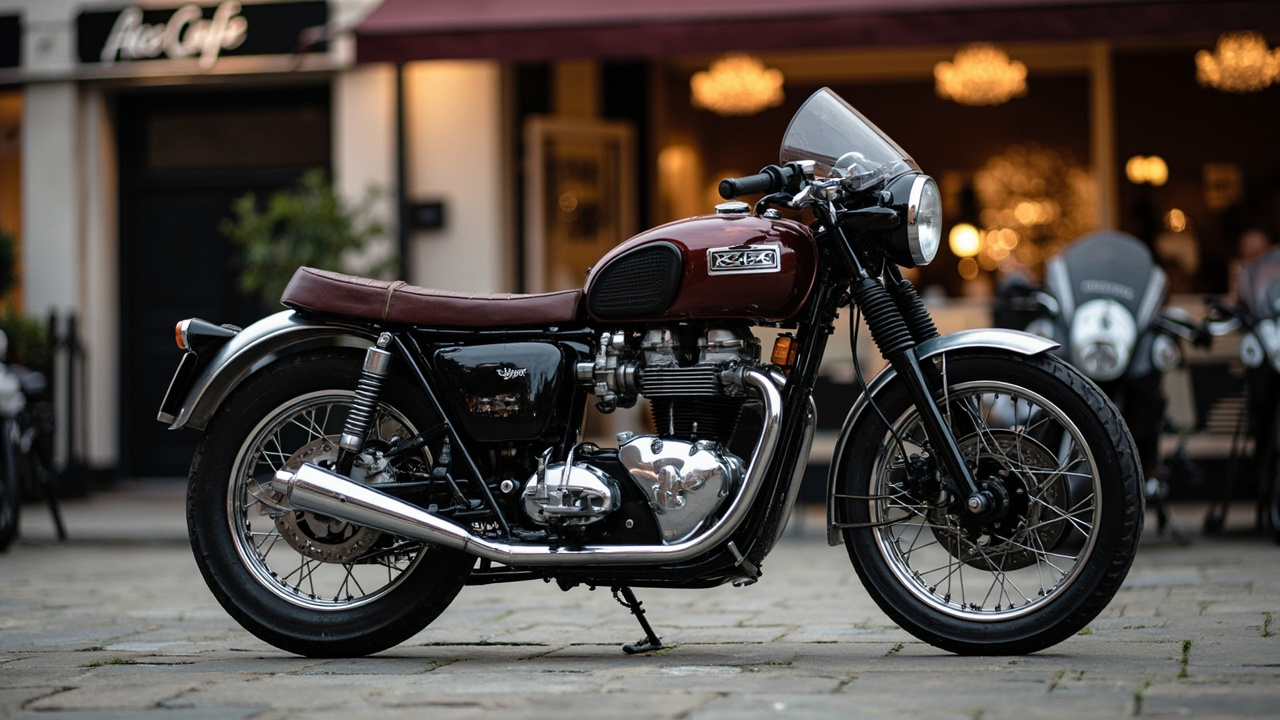
Cafe Racer Culture
Cafe Racer culture originated in London, England, in the 1950s, when groups of young motorcycle riders gathered outside specific cafes and gradually formed a distinctive motorcycle subculture. At the core of this culture was the pursuit of speed and individuality. Riders were passionate about modifying motorcycles into sportier machines so they could move quickly along public roads.
The name of the culture comes from the place where riders most often gathered—Ace Cafe London. This roadside cafe on the A406 in north London became an important landmark of Cafe Racer culture. Every weekend, riders from different places would meet there, exchange modification ideas, and compete in specific "ton-up runs" to see who could reach 100 miles per hour over a timed stretch of road.
Cafe Racer modifications have several important characteristics. The first is low clip-on handlebars, which put the rider in a forward-leaning posture. The second is a single-seat configuration, removing the rear seat to reduce weight and create a more racing-oriented visual effect. Engines were usually kept stock or given only necessary performance upgrades to preserve reliability. Exhaust modifications were common; stainless steel or titanium exhausts not only reduced weight but also produced a more recognizable sound.
By the 1960s, with the rise of Mod culture and the Rockers, Cafe Racer culture reached its peak. Pete Townshend of The Who was a well-known motorcycle enthusiast, and the line "I hope I die before I get old" from "My Generation" was treated by many young riders as a motto. The image of Marlon Brando riding a Triumph motorcycle in The Wild One also deeply influenced young people of the time.
However, after the 1970s, as Japanese motorcycles were imported in large numbers, traditional British brands such as Triumph, BSA, and Norton gradually lost their market dominance, and Cafe Racer culture declined. Many original classic models were left idle or stripped for parts, making the preservation of this culture a challenge.
Entering the 21st century, Cafe Racer culture experienced a revival. In 2001, British director Tony Motoran Williams filmed the documentary Cafe Racer, recording the rebuilding of London's Ace Cafe and the inheritance of this culture by a new generation of riders. Many motorcycle manufacturers also began producing models with classic styling again, such as the Triumph Thruxton, Bonneville, and Moto Guzzi V7 series, providing a new material foundation for the culture.
Today's Cafe Racer culture combines classic and modern elements. A new generation of custom builders preserves the traditional spirit while introducing modern materials and processes. They use digital tools for design, yet still insist on the essence of hand-built craftsmanship. Cafe Racer gatherings can be found around the world, from Tokyo to New York and from Taipei to Sydney. This culture has become a motorcycle subculture phenomenon that crosses national borders.
The continuing development of this culture proves one fact: motorcycles are not only transportation, but also carriers of an attitude toward life. Cafe Racer riders' pursuit of simplicity, speed, and individuality seems even more precious in an age full of choices. Their modification philosophy—using creativity within a limited budget to turn an ordinary motorcycle into a unique work—has also inspired many hands-on motorcycle enthusiasts.