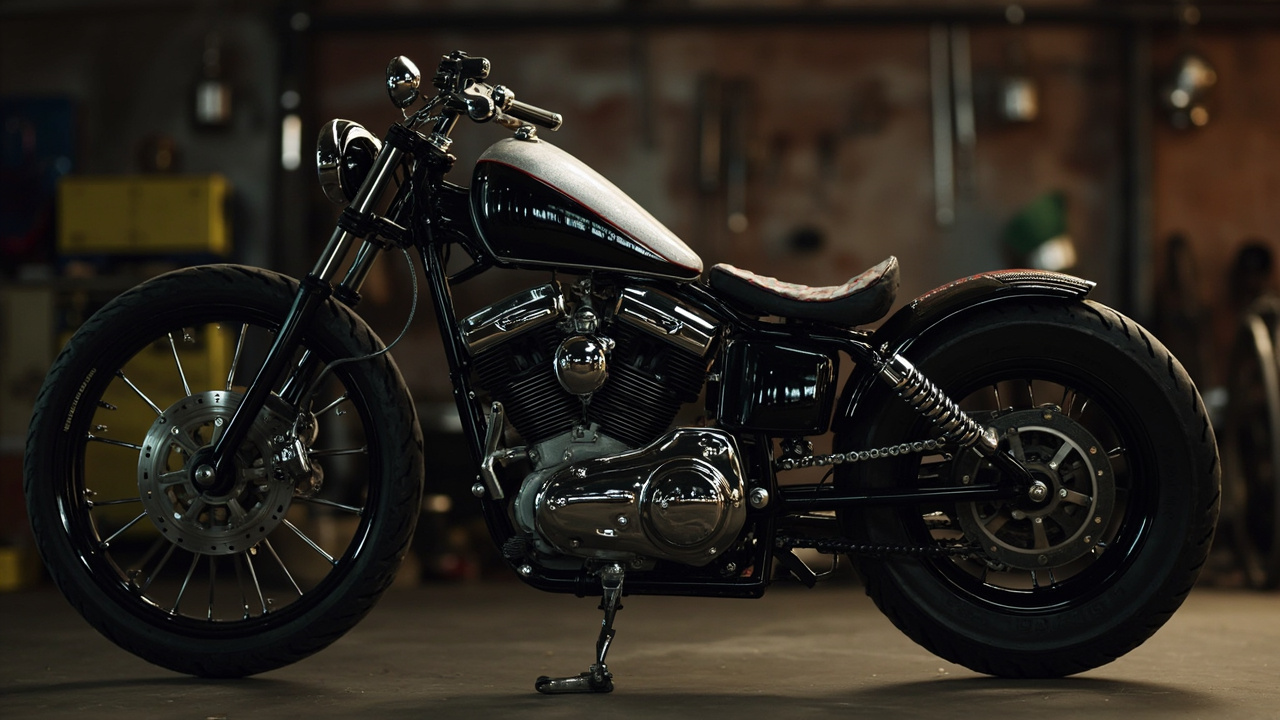
Custom Culture
Motorcycle custom culture is one of the fields in the motorcycle world that best expresses personal creativity and craftsmanship. From simple accessory changes to building a one-of-a-kind motorcycle from scratch, the development of custom culture reflects the deep emotional connection between motorcycles and human beings.
The history of motorcycle customization is almost as long as the history of the motorcycle itself. Early riders began modifying their machines to improve performance or satisfy aesthetic needs. Board track racers in the 1920s removed lights, fenders, and other "unnecessary" parts to reduce weight, which can be considered one of the earliest forms of customization.
British Cafe Racer culture in the 1950s elevated customization to an artistic level. London riders began making various modifications, including installing single seats, clip-on handlebars, and high-performance exhausts. Their goal was to create a clean-lined road racer capable of 100 miles per hour. Although these modifications may look like basic visual changes today, at the time they represented an entirely new aesthetic.
In the United States in the 1960s, custom motorcycles entered a golden age. The Chopper style rose in California, and its design of increased fork rake and longer wheelbase became a symbol of the counterculture of the era. In the 1969 film Easy Rider, Peter Fonda's Captain America Chopper became one of the most famous motorcycles in custom history. With its extra-long forks and flame paintwork, the bike defined a generation's imagination of freedom and rebellion.
During the same period, custom master Bill Murrells invented a style called "rubber CHopper," combining comfort with visual impact. His workshop became a pioneer of later hurricane-like custom styles.
From the 1970s to the 1980s, Japanese custom culture began to emerge. Unlike the flamboyant style of American Choppers, Japanese custom builders emphasized refined craftsmanship and understated aesthetics. Styles such as Wangan Runner and Tokyo Classic showed the unique face of Japanese custom culture.
In the 1990s, custom motorcycles entered a period of diversified development. Customizing old British BSA and Triumph motorcycles became fashionable, while French and German builders also began to appear on the international stage. At the same time, BMW's R-series engines became one of the most commonly used platforms for custom enthusiasts, and the distinctive shape of the horizontal boxer engine provided endless possibilities for custom work.
Entering the 21st century, custom motorcycles became a thriving industry. Major cities around the world now have dedicated custom workshops, with practitioners ranging from traditional metalworkers to modern 3D designers. Large motorcycle shows such as Intermot in Germany and EICMA in Italy have dedicated areas for custom builds. Portland Choppers in Oregon, Rough Crafts in California, Krazy Horse in Germany, and Custom Works ZON in Japan are collectively known as four major global custom motorcycle brands.
Taiwan's custom motorcycle culture has also developed significantly in recent years. Although the flamboyant "beach bike" modification style is controversial, it reflects local riders' pursuit of personalization. At the same time, more young builders are introducing refined custom concepts from Europe, America, and Japan, injecting new vitality into Taiwan's motorcycle culture.
Custom motorcycles can be divided into several main styles. The first is Restyle, which greatly changes the appearance while retaining the original engine and chassis. This approach has the advantage of higher reliability and is suitable for daily riding. The second is Profiling, which usually involves modifying the frame and swingarm to match custom wheels and suspension. The third is Full Custom, which designs and builds an entirely new frame from scratch, with all components reconfigured around that frame. This is the most extreme form of customization and often requires hundreds of work hours to complete.
The boundary between customization and modification is sometimes not very clear. In general, modification refers to replacing or adjusting existing parts, while customization places greater emphasis on originality and uniqueness. What they share is that both reflect the rider's personal emotional projection onto their motorcycle.
In an age of mass production, custom motorcycles represent a commitment to uniqueness and craftsmanship. Every custom motorcycle is a unique work of art, reflecting the builder's skill and the owner's personal taste.