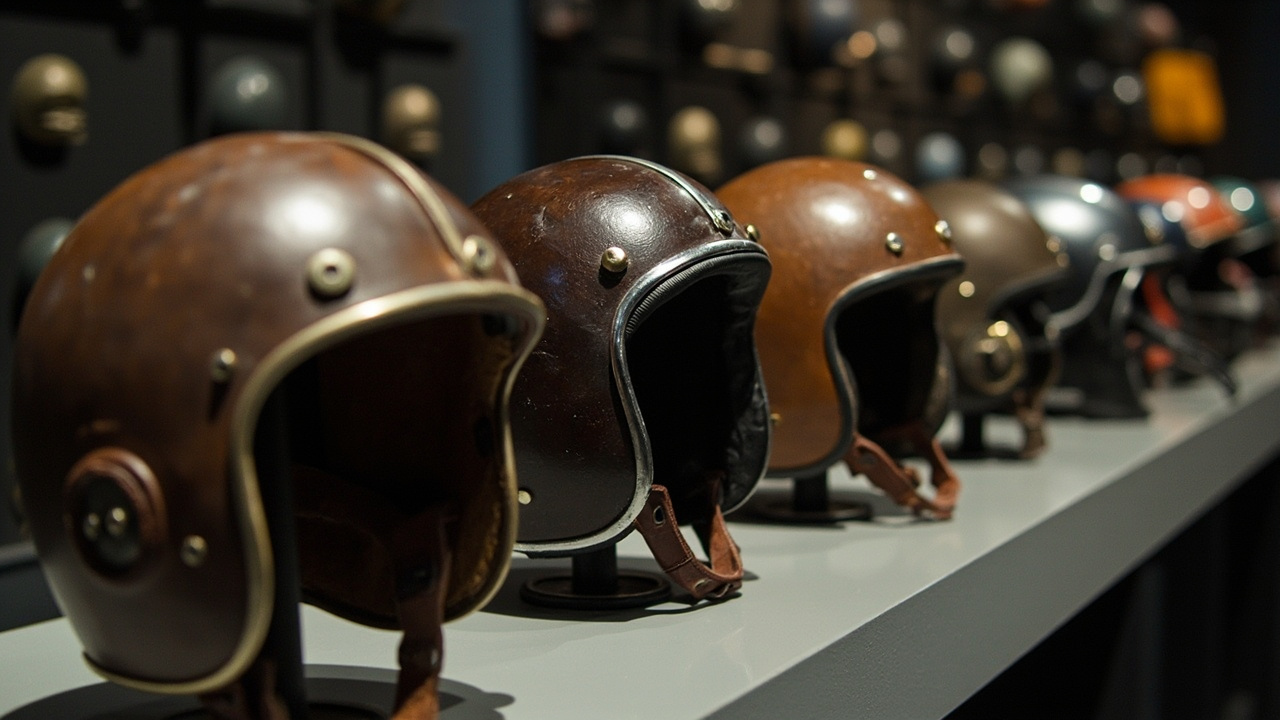
Helmet Evolution
The history of helmets is closely tied to the development of motorcycles. In the early days of the motorcycle, riders had neither the awareness nor the habit of wearing helmets. As motorcycle speeds increased and accidents became more frequent, the necessity of helmets gradually gained attention. This history of evolution shows humanity's continuous pursuit of riding safety.
In American motorcycle racing in the 1910s, simple leather helmet designs appeared for the first time. This so-called "Derby" style helmet was essentially only a hemispherical leather structure covering the top of the head, providing almost no protection against side or rear impacts. Even so, this rudimentary design was the most advanced protective measure of its era. Medical research at the time did not yet fully understand the seriousness of head injuries, so most riders did not attach much importance to this equipment.
In the 1930s, as motorcycles became increasingly important transportation tools, countries began to pay attention to traffic safety. Germany first legislated in 1934 to require motorcycle riders to wear helmets, becoming the first country in the world to establish such regulations. Although enforcement was not strict, this legislation set a precedent for other countries to follow. Britain's Royal Police also began recommending protective equipment to riders during this period.
In the 1940s, the extensive use of military motorcycles during World War II indirectly promoted the development of head protection equipment. Military engineers drew inspiration from pilot helmet designs and began developing stronger protective materials. After the war, these military technologies gradually transferred into civilian use.
The 1950s were a key turning point in helmet technology. Developers in the United States invented FRP (fiberglass-reinforced plastic), a lightweight and strong material that became the foundation of modern helmets. In 1953, Schroth and Bell Helmets collaborated to develop the first full-face helmet designed specifically for motorcycles. This design protected not only the top of the head but also the face and chin.
In the 1960s, helmet standardization and mass production advanced together. The U.S. DOT (Department of Transportation) and Europe's ECE standards were established one after another, defining minimum protective performance requirements for helmets. These standards covered impact absorption, penetration resistance, retention-system strength, and other items. Although standards differed by country, all moved toward improving rider safety.
In the 1970s, the full-face helmet began to spread. This design integrated the chin guard and outer shell into one structure, dispersing forces during impact and protecting the entire head. However, many riders initially resisted this design, considering it too enclosed and too heavy. Open-face helmets and 3/4 helmets still retained market share.
In the 1980s, the use of carbon fiber greatly reduced helmet weight. This high-strength, low-weight material was first used in aerospace and military fields before gradually entering motorcycle helmet manufacturing. Advanced manufacturing processes also improved liner comfort and ventilation.
In the 1990s, Europe's SNELL standard and the U.S. DOT standard formed two major certification systems. The SNELL standard was stricter and used more demanding testing methods, so many racing organizations required helmets that complied with SNELL standards. This also pushed manufacturers to continuously improve product performance to meet regulations and racing requirements in different countries.
In the 2000s, with advances in computer-aided design, helmet aerodynamics and internal structural optimization reached new levels. 3D scanning technology allowed manufacturers to customize helmet liners for different head shapes, providing better fit, protection, and comfort. Pinlock anti-fog systems and quick-release visor mechanisms also became standard equipment.
In the 2010s, the invention of MIPS (Multi-directional Impact Protection System) was an important breakthrough in helmet safety. This design imitates the way the brain moves inside the skull and can reduce rotational-force injury during impact. More and more brands have begun adopting this technology as a point of product differentiation.
In recent years, smart helmets have become a new trend. Products integrating built-in head-up displays, Bluetooth communication systems, dashcams, and rear cameras have appeared on the market. While these functions improve convenience, they have also sparked discussion about driver distraction and system reliability.
The evolution of helmets reflects society's continuing emphasis on traffic safety. From simple leather caps to today's protective equipment integrating many advanced technologies, this development process of more than a century shows human wisdom and creativity in the face of risk.