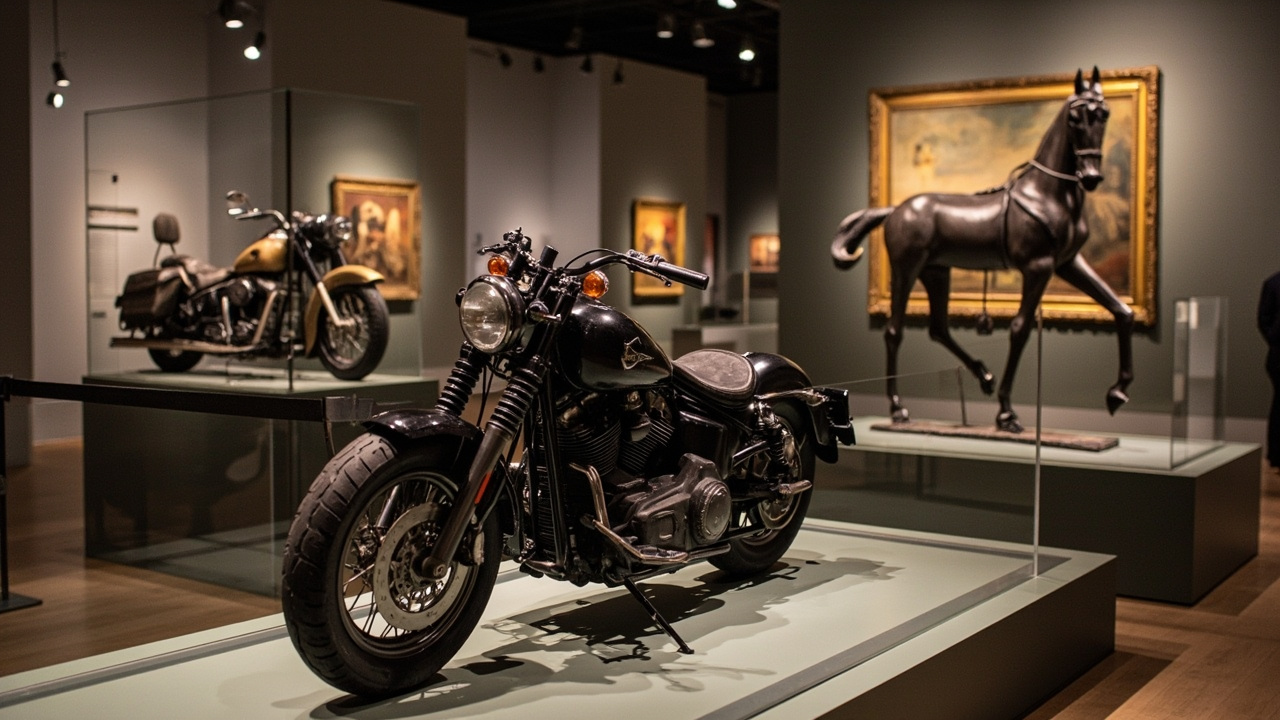
Motorcycle and Art
As a cultural symbol, the motorcycle has long had a place in the field of art. From the Futurist movement of the 1920s to contemporary new media art, motorcycles and their related elements have continued to inspire artists. This intersection of art and machinery expresses humanity's relentless pursuit of speed, aesthetics, and freedom.
The Futurist art movement was the starting point of the union between motorcycles and art. Italian Futurists of the 1910s, such as Filippo Tommaso Marinetti, saw motorcycles as perfect symbols of modernity and speed. In his Futurist Manifesto, Marinetti wrote that the beauty of battle, militarism, and the message of destroying the old world were all objects of praise; the motorcycle—a machine capable of delivering speed and power—became a medium for realizing these ideals. Similar streamlined structures resembling motorcycle forms can also be seen in Antonio Sant'Elia's Futurist architectural designs.
American muscle cars and motorcycle culture of the 1940s and 1950s gave rise to a distinctive popular art style. Robert Williams and other artists of the Lowbrow Art movement began incorporating motorcycles and motorcycle-related lifestyles into their work. Works combining comics, graffiti, and street art elements became an important branch of visual art from the 1970s onward.
During this period, motorcycles also became an important subject in fashion photography. Works by Bruce Davidson, William Claxton, and other documentary photographers captured many aspects of American motorcycle culture in the 1950s and 1960s. These images became important cultural records of the era and provided endless inspiration for later creators.
The 1970s were a flourishing period for motorcycle-themed art. American pop artists such as John D. McCarthy and Peter Squire created large numbers of motorcycle-themed posters and murals. These works often appeared at motorcycle gatherings and rallies, becoming visual symbols of the culture. At the same time, Britain's punk rock movement began incorporating motorcycle aesthetics into poster design and album covers.
From the 1990s to the present, motorcycle-themed art has taken on more diverse forms. American artist Curtis D. Scott specializes in hyperrealistic motorcycle oil paintings, known for precise detail and treatment of light and shadow. Artists such as Britain's Simon Rickerty and Japan's Kazu H. Miller combine motorcycle themes with cartoon and manga styles, creating works with humor and critical meaning.
Art collaborations by motorcycle brands have also become an important cultural phenomenon. Many motorcycle manufacturers with histories of more than half a century have rich archives and visual heritage. These brands have begun collaborating with contemporary artists, licensing the use of historical images and logos or commissioning artists to create exclusive works for brand events. Collaborations between Ducati and Armani, and BMW and Andy Warhol, are well-known examples of such crossover work.
Motorcycle art exhibitions and fairs are also thriving around the world. The Motorcycle Art Gallery in California is one of the few commercial galleries dedicated to motorcycle-themed art. Such spaces provide platforms for artists to show their work and create places for collectors and enthusiasts to exchange ideas.
Motorcycle elements are also common in street art. From New York subways to the streets of Paris, motorcycle-themed graffiti and murals have become part of urban landscapes. These works reflect the diversity of motorcycle culture in different cities and express artists' personal interpretations of the culture.
Beyond traditional visual art, motorcycles have also become material for performance art and conceptual art. Artists such as Ryan McGinness and Shepard Fairey have created conceptual works using motorcycles as themes, challenging audiences' established perceptions of this form of transportation.
In the digital age, the creation and dissemination of motorcycle art are also changing. Digital artists and 3D modelers are presenting motorcycles in unprecedented ways, creating surreal or entirely fictional motorcycle images. Although these works may never become physical objects, they have opened an entirely new field of art.