Off-Road Culture
Off-road motorcycle culture is one of the most primal and adventurous areas of the motorcycle world. Beginning with dirt racing in the 1960s, off-road motorcycle culture developed into a complete system containing many specialized disciplines, including motocross, enduro, trail riding, rally raid, and freestyle.
The origins of off-road motorcycles can be traced to the earliest days of motorcycling. At that time, motorcycles had no paved roads to ride on, and riders had to move through terrain filled with mud, gravel, and rocks. In 1903, France held the world's first known off-road motorcycle race, in which participants had to ride through rural areas to complete a mail-delivery task. This primitive form of competition laid the foundation for later off-road motorcycle sport.
In 1913, Britain's Auto-Cycle Union organized the first Scrambles race, the predecessor of modern motocross. Obstacles were set up in rural farmland, and participants had to overcome swamps, fences, steep slopes, and other challenges. In 1924, the sport spread to the Netherlands and Belgium and began becoming popular across Europe. In 1952, the FIM (Fédération Internationale de Motocyclisme) officially included motocross in its world championship events, bringing off-road motorcycle sport into a formalized stage of development.
Motocross is the most representative discipline in off-road motorcycle culture. Races take place on closed dirt tracks with artificial obstacles such as jumps, corners, and ramps. Modern motocross tracks are usually between 1.5 and 2 kilometers per lap, with races lasting 30 minutes plus two laps or longer. Multiple motorcycles start at the same time and compete on bumpy, undulating tracks. This discipline tests motorcycle handling, engine performance, and the rider's stamina and skill.
Enduro is another mainstream off-road motorcycle sport. Unlike motocross, enduro races cover longer distances, often dozens or even hundreds of kilometers. The special feature of the race is timed checkpoints, which riders must pass within specified times. This type of competition simulates various real off-road riding conditions, including long non-racing sections and technical obstacle sections. The famous Dakar Rally can be considered the highest level of enduro sport. Since 1979, riders in this event have had to cross deserts, mountains, and grasslands over two weeks, with total distance exceeding 10,000 kilometers.
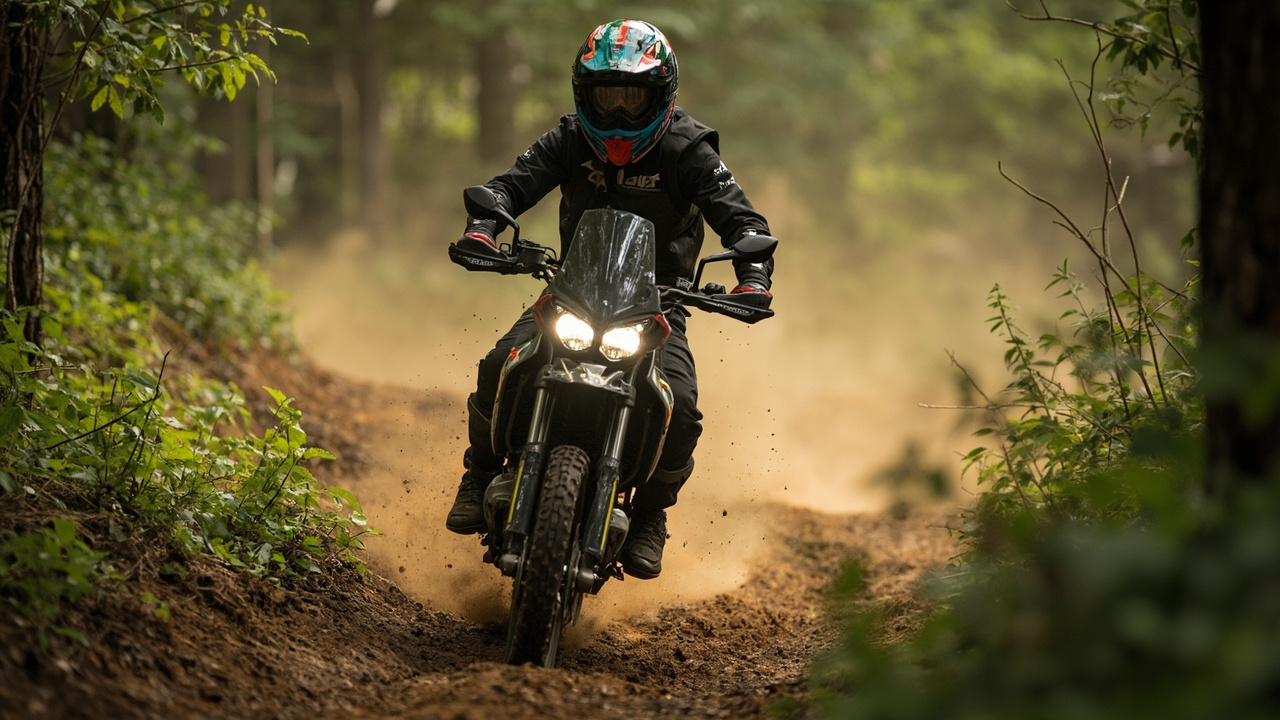
Trail riding is an activity between formal racing and recreational riding. Participants ride off-road motorcycles through natural terrain, enjoying contact with nature. National forest road systems in North America and the Alpine trail networks of Europe provide many route options for trail riding. The entry threshold is relatively low and does not require professional racing skills, but it still requires basic off-road riding training and suitable equipment.
Freestyle Motocross is one of the fastest-growing off-road motorcycle disciplines in recent years. FMX riders perform aerial stunts from huge ramps, including backflips, side flips, and rotation tricks. This sport occupies an important place in extreme sports culture and attracts many young participants. In 2001, Nate Adams became the first supercross rider to complete a backflip, opening a new era in FMX technical evolution.
Another important part of off-road motorcycle culture is modification and customization. The modification direction of off-road motorcycles is completely different from street motorcycles. The focus is on increasing suspension travel, strengthening cooling performance, and reducing weight. Common modifications include replacing tires with off-road tread patterns, adjusting engine valve timing, and adding handguards and skid plates.
Off-road motorcycle culture has also produced distinctive clothing and gear fashion. Off-road motorcycle boots, knee and elbow guards, chest protectors, and off-road helmets protect rider safety while also becoming visual symbols of the culture. Many recreational off-road riders also wear this professional equipment, creating a distinctive style belonging to this culture.