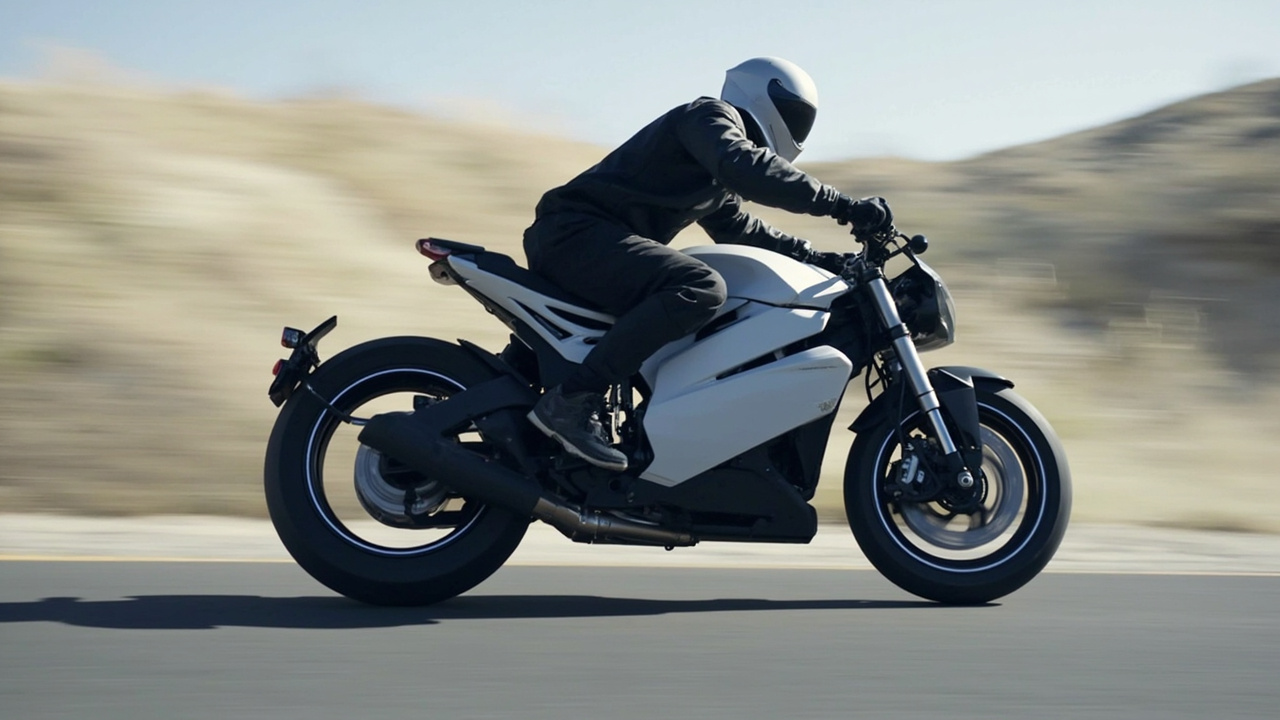
The Development History of Electric Motorcycles
The development of electric motorcycles reflects humanity's continuing pursuit of sustainable transportation. From early experiments in the late nineteenth century to commercial mass production in the twenty-first century, electric motorcycles have gone through a long and winding process of development.
The history of electric motorcycles can be traced to 1881. French engineer Gustave Trouve demonstrated the world's first operable electric tricycle. This model used lead-acid batteries as its power source and had a top speed of only about twelve kilometers per hour, but it demonstrated the feasibility of electric power for transportation. During the same period, America's William Morrison also developed similar electric vehicles.
From the 1890s to the 1910s, electric motorcycles once competed with internal-combustion motorcycles. At the time, electric motorcycles were relatively popular among women riders because they were quiet and vibration-free. However, the low energy density of lead-acid batteries limited range to only about thirty kilometers, making them far less practical than early internal-combustion motorcycles. With progress in internal-combustion technology and the spread of petroleum supply, electric motorcycles gradually left the mainstream market in the early 1920s.
In the 1960s and 1970s, the rise of the environmental movement brought renewed attention to electric motorcycles. In 1967, American Mike Corbin developed an electric motorcycle called the "Lectra," using a newer nickel-cadmium battery and reaching a top speed of forty-five kilometers per hour. In 1975, the "Maxi" electric motorcycle became the first commercially produced electric motorcycle, with a top speed of about fifty kilometers per hour and a range of about sixty kilometers.
In the 1990s, battery technology made significant progress. Lithium-ion batteries offered about five times the energy density of lead-acid batteries, greatly improving the practicality of electric motorcycles. In 1996, Electric Vehicle Motors (EVM) introduced a series of lithium-ion electric motorcycles with top speeds of 120 kilometers per hour and ranges exceeding one hundred kilometers.
In the 2000s, Zero Motorcycles was founded in 2006 and became the first modern manufacturer focused on electric motorcycles. Zero's products used lithium-ion batteries and AC motors, with top speeds over 160 kilometers per hour and ranges above two hundred kilometers. Zero's success encouraged more companies to enter the electric motorcycle market.
In the 2010s, traditional motorcycle manufacturers began investing in electric motorcycle development. In 2014, Honda introduced the RCB250F, an innovative model using an in-wheel motor design, though it did not enter mass production. Yamaha displayed the PES1 and PES2 concept bikes in 2015, using removable battery designs. KTM introduced the Freeride E-XC in 2015, an off-road motorcycle using lithium-ion batteries and a liquid-cooled motor.
In 2015, Lightning Motorcycles displayed the LS-218 prototype, with a top speed of 350 kilometers per hour, becoming the fastest production electric motorcycle of the time. This model used an aerospace-grade aluminum-alloy frame and a highly efficient liquid-cooled motor, demonstrating the performance potential of electric motorcycles.
In 2018, Electric Motorcycle Maker Cake was founded and introduced the Ösa series of electric motorcycles, using minimalist design language and modular functional configurations. In 2019, Harley-Davidson introduced the LiveWire, using a liquid-cooled motor and lithium-ion battery pack, aimed at high-end consumers.
In the 2020s, electric motorcycle development entered a new stage. In 2021, Damon Motorcycles introduced the Hypersport, with a 280-horsepower motor and a range of four hundred kilometers. In 2022, Honda announced the EM1 e:, a lightweight electric motorcycle that began sales in Japan and Europe in 2023, marking the formal entry of a traditional giant into the mass market.
In 2024, Yamaha announced new electric motorcycles including the YB125/-T/-X, showing its continued investment in electrification. During the same period, Taiwanese manufacturers such as KYMCO and SYM also introduced multiple electric motorcycles aimed at affordable, practical markets.
Looking ahead, electric motorcycles still face several challenges. The first is the issue of battery cost and charging infrastructure. Commercial applications of new technologies such as solid-state batteries may achieve breakthroughs from the late 2020s to the early 2030s. The second is charging time, as most electric motorcycles currently require several hours to fully charge. The last is the balance between weight and range, since larger battery packs significantly increase vehicle weight.
Government policies also influence electric motorcycle development. The European Union's Euro 5 emissions standard and its policy to ban sales of fuel engines in 2035 create opportunities for electric motorcycles. Countries such as China and India have also introduced electric-vehicle subsidy policies, stimulating the development of local electric motorcycle industries.