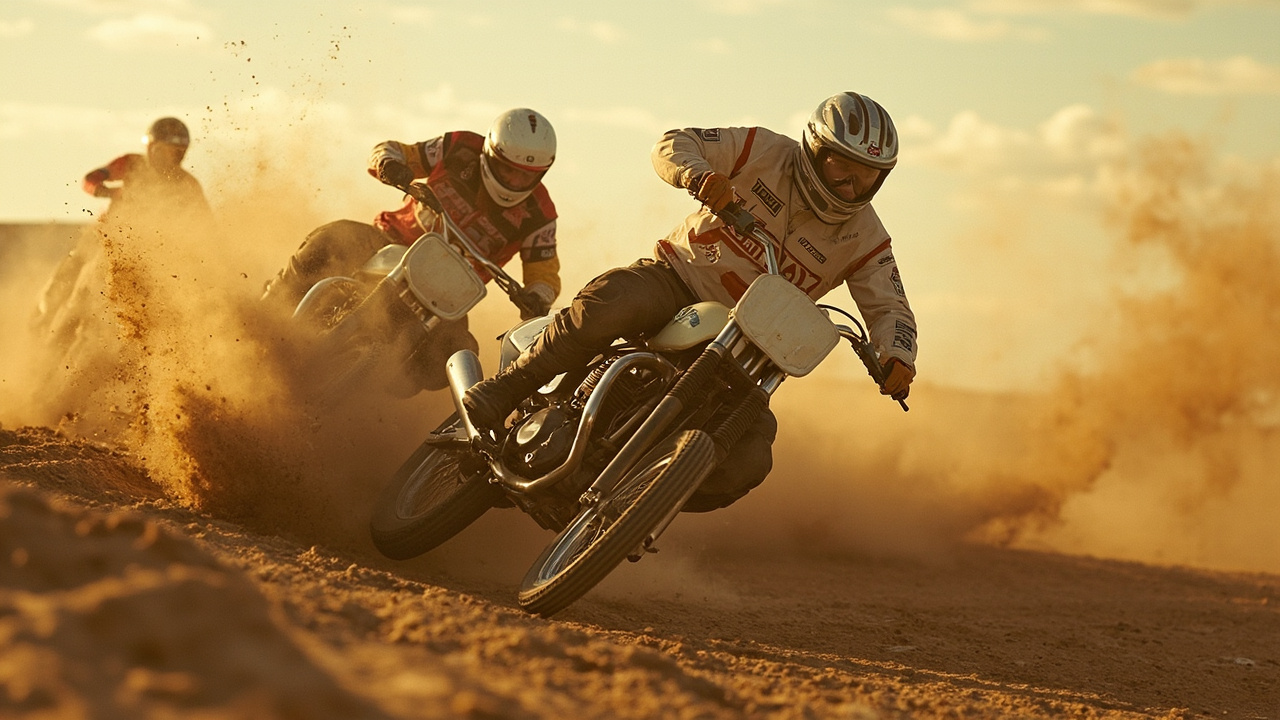
The Golden Age of Two-Stroke Motorcycles
With their simple structure, high power-to-weight ratio, and distinctive exhaust sound, two-stroke engines hold a unique place in motorcycle history. From the 1970s to the 1990s, two-stroke motorcycles reached their peak. Whether in racing or production models, two-stroke engines showed irreplaceable technical advantages.
The basic principle of a two-stroke engine is to use the piston's up-and-down motion to complete intake, compression, combustion, and exhaust within two strokes, avoiding the separate lubrication system required by four-stroke engines. This design gives two-stroke engines far fewer parts, lighter weight, and power output every revolution rather than every two revolutions. These traits gave two-stroke engines a decisive advantage in power-to-weight ratio.
Japanese manufacturers invested heavily in two-stroke technology. Suzuki introduced the T20 in 1962, equipped with a 250cc two-stroke twin-cylinder engine producing thirty horsepower, setting the highest output in the 250cc class at the time. In 1969, Suzuki introduced the T500, using a 500cc two-stroke twin-cylinder engine and becoming one of Japan's first mass-produced 500cc motorcycles.
Yamaha introduced the TD1 in 1968, equipped with a 250cc two-stroke twin-cylinder engine and designed specifically for American AMA dirt-track racing. The TD1's success gave Yamaha a firm foothold in technical competition, and the company introduced the TD2 in 1970 with continued performance improvements.
Kawasaki's two-stroke technology was also ahead of its peers. In 1973, Kawasaki introduced the H2 750, equipped with a 750cc two-stroke three-cylinder engine producing 62 horsepower and a top speed of 195 kilometers per hour. The price of the H2 was shocking fuel consumption and emissions pollution, but its violent acceleration created a unique market position.
Two-stroke motorcycles' dominance in off-road racing was even more obvious. In 1973, Yamaha introduced the YZ250, equipped with a 250cc two-stroke single-cylinder engine, becoming a benchmark motocross model. The YZ250 balanced light weight with strong power output, and the setup of its front and rear suspension systems influenced the design direction of later motocross motorcycles.
Enduro and MX (motocross) were also two-stroke domains. In 1978, Honda introduced the Elsinore CR250, equipped with a 250cc two-stroke single-cylinder engine. This model is regarded as a pioneer of modern motocross motorcycles. The Elsinore CR250's twin-spar aluminum-alloy frame and hydraulic clutch led innovations in motocross technology.
The development of two-stroke technology also faced challenges. The oil crisis of the 1970s made fuel consumption a consumer concern, while increasingly strict emissions regulations created structural limits for two-stroke engines. The mixed burning of lubricating oil and the higher CO and HC emissions of two-stroke engines made it difficult for them to pass U.S. EPA emissions standards.
From the mid-1980s to the 1990s, four-stroke off-road motorcycle technology advanced rapidly. Honda introduced the CR500 in 1984, using a 500cc two-stroke single-cylinder engine, but by this time four-stroke engines were already showing advantages in reliability and running costs. In 1991, Kawasaki introduced the KX250 with a redesigned aluminum-alloy frame, attempting to find a balance between two-stroke and four-stroke characteristics.
By the late 1990s, two-stroke motorcycles were declining in both production and racing. The European Union's Euro 1 emissions standard took effect in 1996, placing stricter limits on motorcycle emissions. In 2001, the Euro 2 standard came into force, and two-stroke motorcycles almost completely withdrew from the European market.
However, two-stroke engines did not disappear completely. In specific fields such as lightweight motorcycles, scooters, and personal watercraft, two-stroke engines continued to be widely used because of their simplicity, reliability, and high power-to-weight ratio. In addition, two-stroke engines still hold a certain market share in motocross and Enduro racing, especially among entry-level and amateur riders.