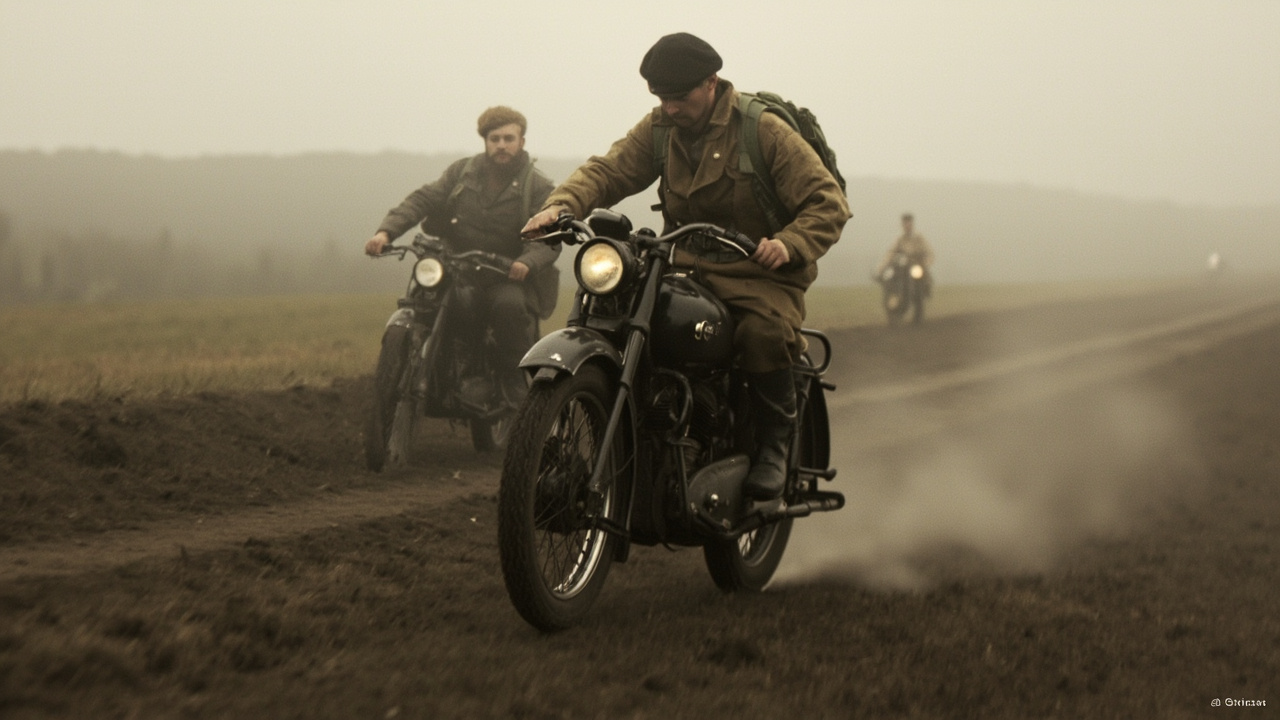
The First World War and Motorcycles
The First World War, from 1914 to 1918, was an important turning point in motorcycle history. Before the war, motorcycles were mainly civilian transportation, and militaries had limited interest in them. However, the practical needs of war brought unprecedented military attention to motorcycles.
At the beginning of the war, the belligerent nations generally lacked sufficient numbers of motorcycles. Britain, France, Germany, and other countries began purchasing large numbers from civilian motorcycle manufacturers to meet military communication and reconnaissance needs. After war broke out in 1914, Britain's Triumph immediately converted its civilian motorcycle production line for military use and supplied thousands of motorcycles to the British Army. These motorcycles were mainly used to deliver orders, scout enemy conditions, and transmit intelligence, and they required strong reliability and off-road capability.
The main advantage of motorcycles on the battlefield was mobility. Compared with horses and bicycles, motorcycles could move at higher speeds and had lower maintenance costs. In trench warfare on the Western Front, motorcycles became an important means of transport for officers moving between positions. The German army widely used Zündapp and BMW motorcycles, especially BMW's R32, which used shaft drive and was highly reliable, becoming standard equipment for German motorcycle troops.
The design requirements of military motorcycles promoted several technical innovations. To handle poor road conditions, manufacturers developed stronger frames and suspension systems. Front-wheel drum brakes gradually became standard equipment to provide stronger deceleration. Requirements for engine reliability and durability made four-stroke engines the mainstream choice for military motorcycles, indirectly establishing their dominance in the following decades.
Before entering the war, the United States Army had very few motorcycles. In 1917, the U.S. military purchased large numbers of motorcycles from Harley-Davidson and Indian and assigned them to communications units. Harley-Davidson's JD model and Indian's Powerplus became the most common U.S. military motorcycles. This experience gave American manufacturers valuable military motorcycle technology and production capacity, laying a foundation for later development.
During the war, motorcycle manufacturers also began experimenting with sidecar designs, allowing motorcycles to carry machine guns or additional soldiers. Sidecar motorcycles were especially common on the Eastern Front, with Russian and Austro-Hungarian forces both using this configuration extensively. The addition of sidecars greatly increased the tactical value of motorcycles, making them important tools for infantry support.
After the war, large numbers of military motorcycles flowed into the civilian market, causing prices to collapse. Most of these military motorcycles had been well maintained and were reliable, becoming an important force in the postwar spread of motorcycles across Europe and America. Many veterans chose motorcycles as tools for postwar livelihood or leisure, indirectly giving rise to early forms of motorcycle culture.