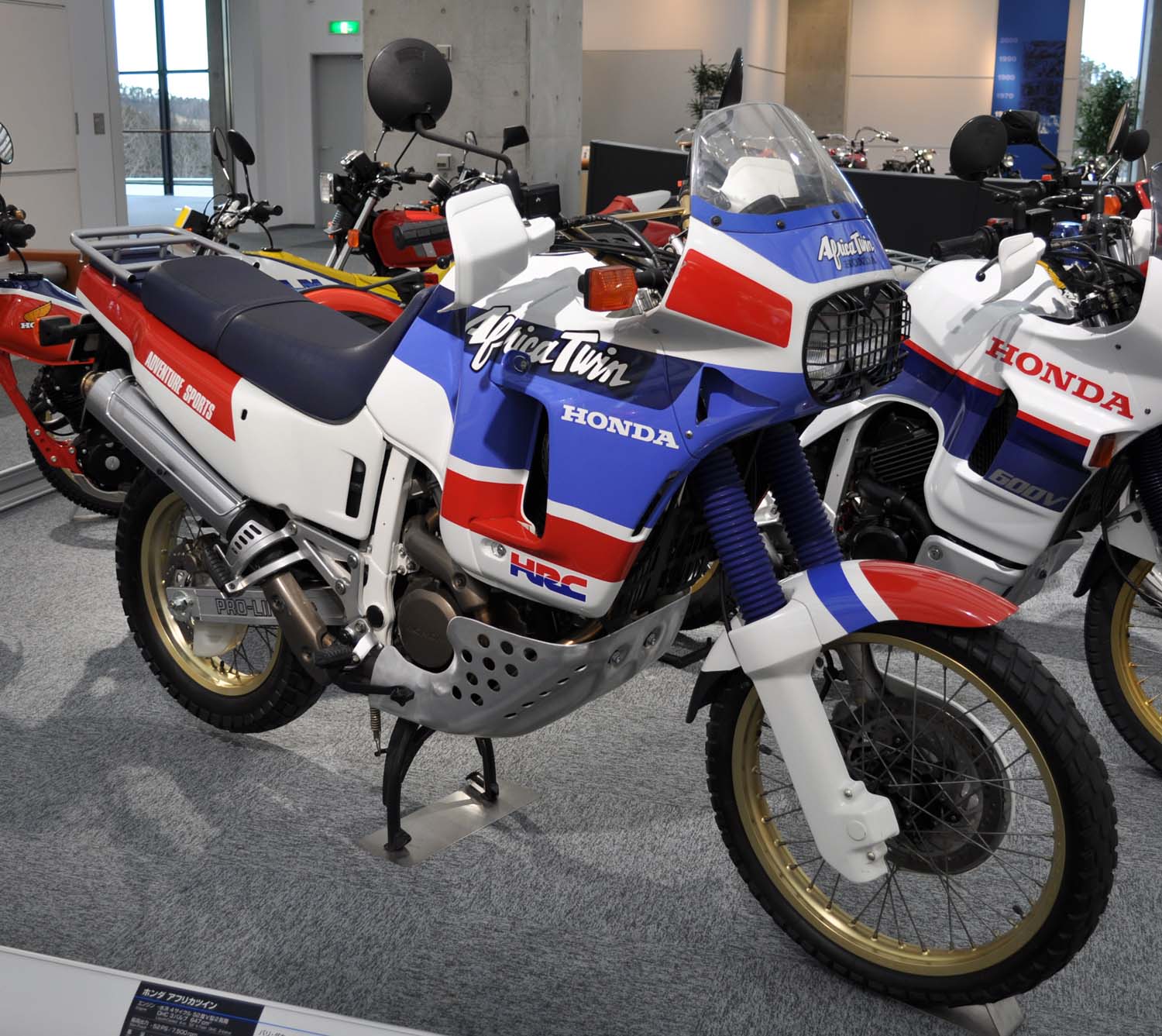
Honda Africa Twin (1988) — Adventure Motorcycling Pioneer
The Honda Africa Twin, introduced in 1988, established the blueprint for adventure motorcycles that could genuinely travel anywhere. It combined Honda's reliability with capability both on and off-road.
Historical Significance
The Africa Twin was developed from Honda's Paris-Dakar Rally experience. The NXR750 had won the rally multiple times, and Honda wanted to bring that technology to street-legal adventure bikes.
The result was a motorcycle equally at home on the Autobahn or a dirt trail—a versatility that defined the adventure category.
Technical Highlights
V-Twin Engine
The 742cc liquid-cooled 90° V-twin featured:
- DOHC 4-valve heads for each cylinder
- Compact cylinder spacing for narrow width
- Electric starter as standard
- Shaft drive for low maintenance
Off-Road Capability
The Africa Twin's chassis included:
- 21-inch front wheel for obstacle clearance
- Long-travel suspension (8 inches front, 7.1 rear)
- Dual disc brakes front (1988-1992)
- Skid plates as standard equipment
True Adventure
Unlike modern adventure bikes that prioritize on-road performance, the Africa Twin was genuinely capable off-road:
- Light weight (441 lb dry)
- Narrow profile
- Low seat height (32.7 inches)
- High ground clearance
Visual Character
The Africa Twin features:
- Tall windshield with bird-beak styling
- Large 5.3-gallon fuel tank for range
- Wire-spoke wheels with tubes
- Trilingual "Africa Twin" decal (English, French, Spanish)
Classic colors: Tri-color scheme (red, white, blue) as used on the Paris-Dakar works bikes.
Source: Wikipedia - Honda Africa Twin